
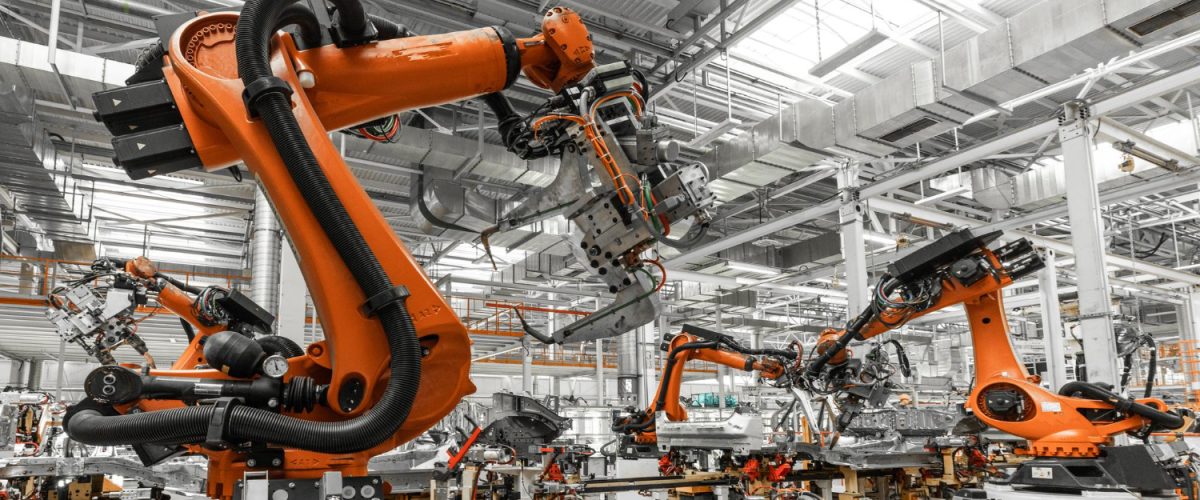

Robot programming
We have worked on numerous projects involving the programming and integration of robotic systems for various automotive production lines.

PLC programming
Our expertise in programming PLC systems allows us to automate complex processes in the automotive industry.

Optimization
Optimization of cycle time and movement of robots and other systems, fine tuning.
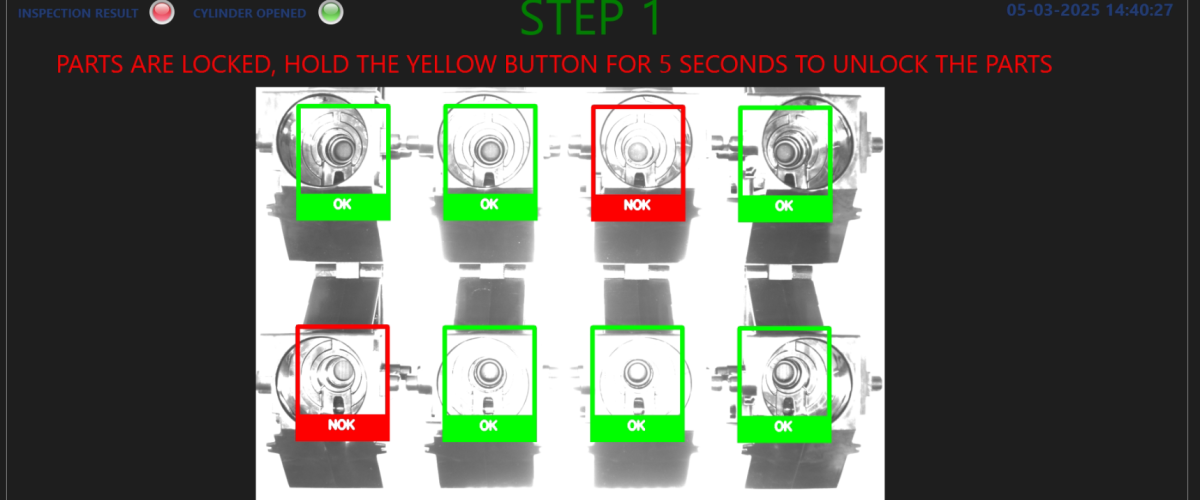
Camera programming (BLACK RUBBER ORING IN BLACK PARTS)
The station functions through two separate programs, both launched at the request of the operator by clicking a button: Check for black rubbers - the system checks the presence of all 8 rubbers through visual inspection. White Plug Check - the operator runs another program that checks for the presence of white plugs before the assembly is passed on to the next operation. The operator manually positions the parts on the fixture, and the app ensures that no component is missing. In the event that any check reports an error, the system automatically locks the parts and prevents their further forwarding, thus preventing potential problems in the welding process and ensuring a constant level of quality. This solution is custom-made and fully adapted to the specific requirements of the production process, which significantly reduces the possibility of human error, optimizes the production flow and achieves maximum reliability and quality of the final assembly.
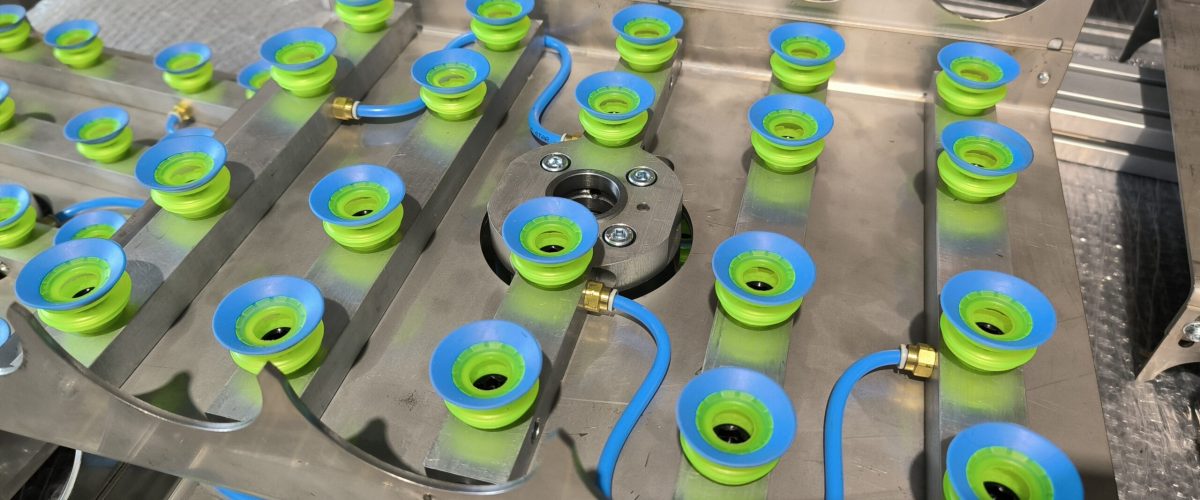
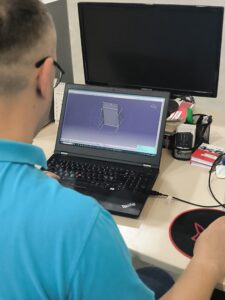
Commitment to the project
At the client's request, our team designed, manufactured and delivered 21 different grippers for handling different formats and types of parts within two months. The main challenge of the project was to make a quick-change flange compatible with existing machines, with an extremely short delivery time. The construction was done intensively and in parallel with the preparation for mechanical production, in order to speed up the process as much as possible. The project included the complete procurement of vacuum caps, assembly of all grippers and delivery of the finished solution to the client.
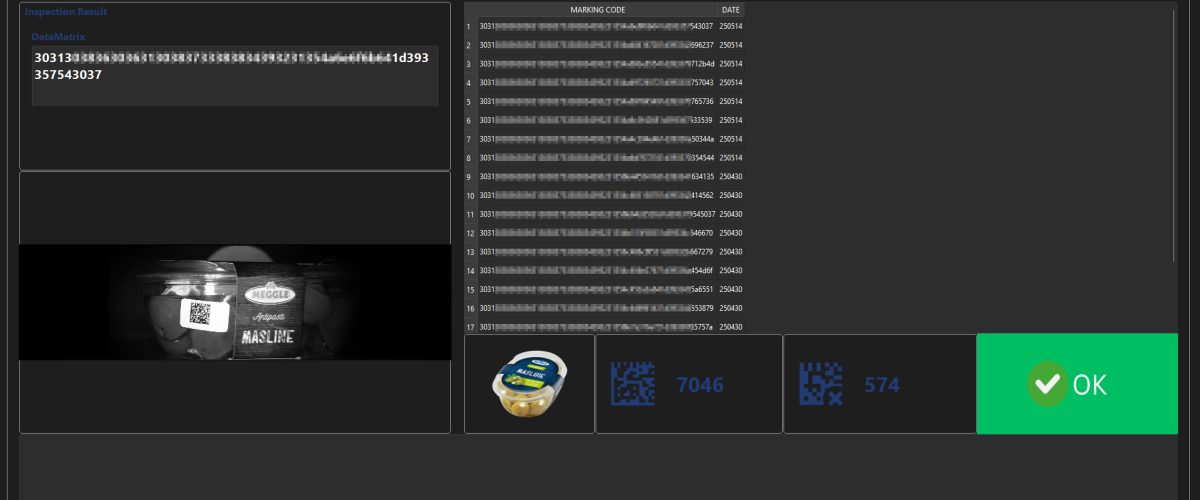
Camera Programming (DataMatrix Codes)
Main functionalities of the system: Code scanning and classification – the camera reads DataMatrix codes and automatically classifies them as valid or invalid. Uniqueness check – built-in algorithms check if the code has already been read before, thus eliminating the possibility of duplication and errors in product tracking. Automatic logging - every product that successfully passes the inspection is recorded in the system and marked as verified. Smart production management – in case of detection of faulty or duplicated code, the system automatically stops the production line at a predefined position, allowing the operator to react safely and remove defects. Statistical monitoring and analysis - the application stores data on all readings and inspection results, allowing the generation of statistical reports on the frequency of errors, repeated codes and overall efficiency of the process. This solution not only eliminates the possibility of defective products passing through, but also provides full traceability, improves quality control and provides valuable data for optimizing the production process.
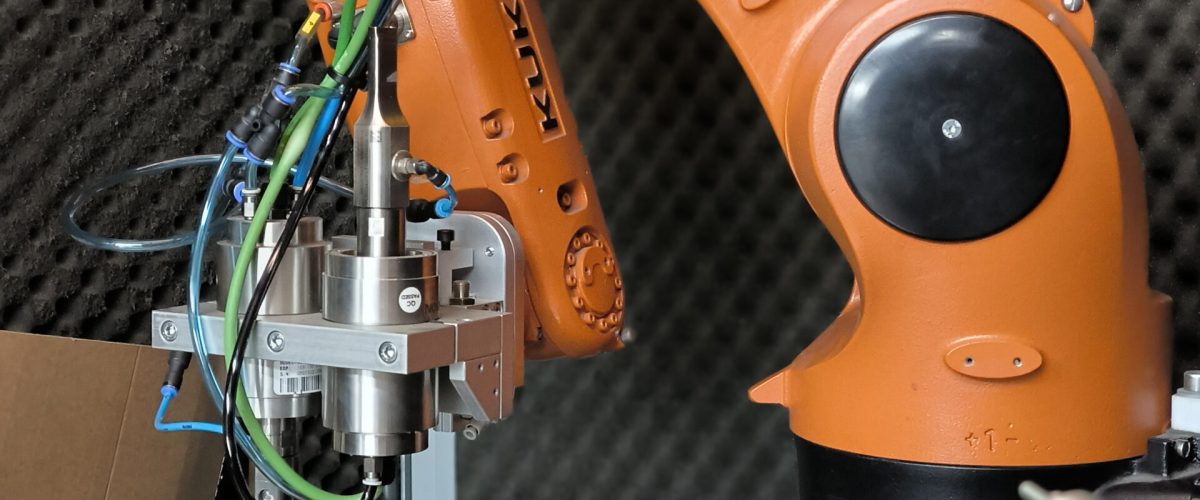
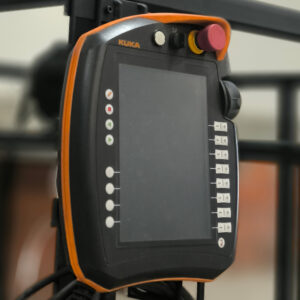
A flexible and highly productive solution for simultaneous welding of multiple parts in the automotive industry.
As part of the project, the complete integration of an industrial robot with two ultrasonic guns for simultaneous welding of two parts was realized. The solution includes programming of Cook robots, integration of Branson ultrasonic generators, management of pneumatics, clamps and cycle time optimization. Special focus was on process stability, weld reproducibility and quality control, in accordance with the requirements of the auto industry. The station is additionally adapted to work with different fixtures, which enables the welding of several types of parts without major delays in production.
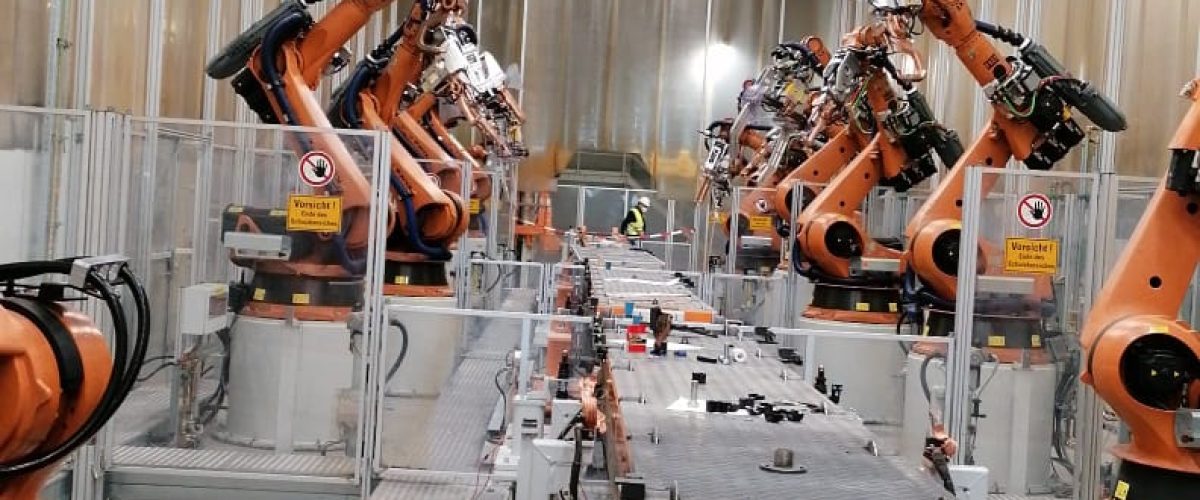
A complex multi-technological robotic line realized according to German industrial standards.
The project involved complete integration and programming of robotic systems for spot (spot) welding, CMT welding, laser welding, adhesive application and sanding after welding. Each robotic cell is optimized in accordance with the given cycle times and final quality requirements. The works were carried out in accordance with German standards and procedures, including testing, process validation and commissioning. Special focus was on system reliability, process repeatability and stable operation in series production.
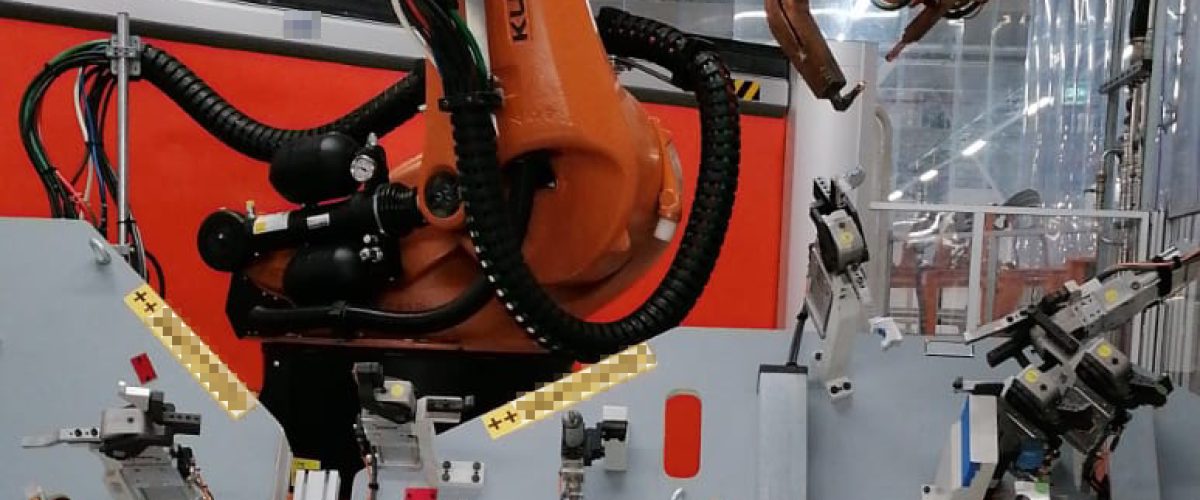
A highly demanding robotic solution implemented for a client in Hungary, following a recommendation from Germany.
As part of the project, a complete solution was implemented that includes the integration of KUKA robots with Siemens PLC control. The station is designed to work with 12 different product models, with complete synchronization of the robot program, clamps and processes. A special focus was placed on the safety of the operator, given that it was a station with manual loading of parts. Appropriate safety solutions and management logic have been implemented, in accordance with valid industrial and safety standards.
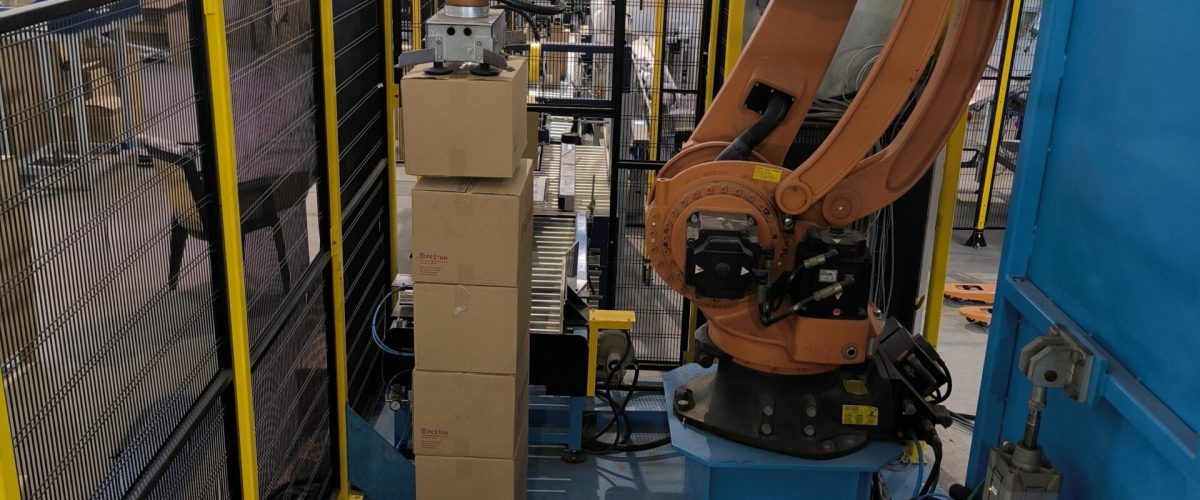
Automated palletizing and packaging line with flexible recipe management.
As part of the project, the robot palletizer was integrated with the automatic pallet warehouse and the stretching system. A PLC system was added that enables central management and connection of the entire line with the client's existing infrastructure. An HMI interface has also been implemented that allows operators to easily select recipes for stacking and packing boxes according to internal standards. The solution was designed with a focus on reliable operation, flexibility and easy handling in everyday production.
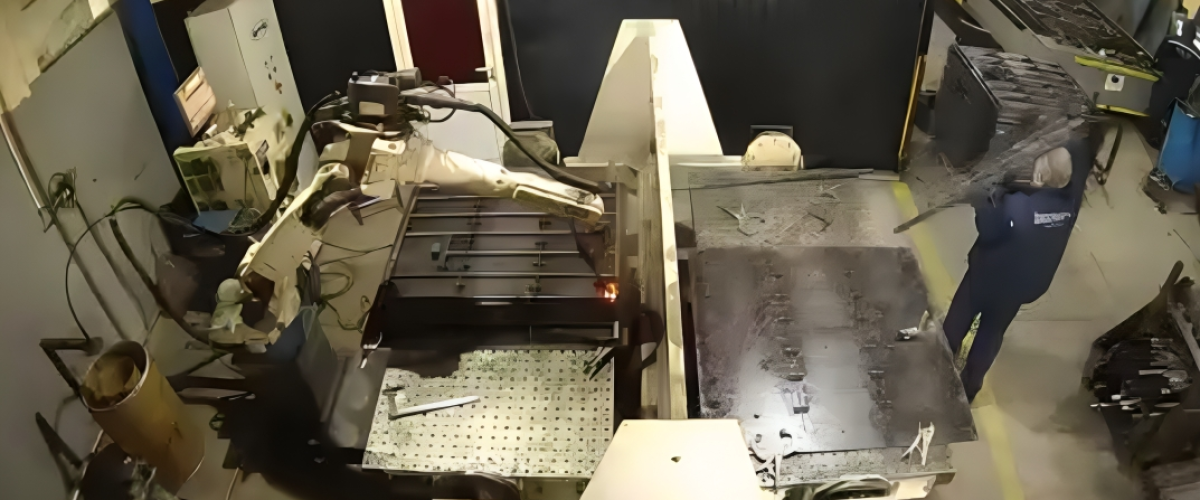
Modernization, integration and training for stable and long-term production.
Although the cell was structurally intended for this type of application, the complete system was delivered as used from abroad, and it was necessary to perform a detailed preventive service before assembly and commissioning. After the service and mechanical installation, complete integration of the system and optimization of the welding process was carried out. Thanks to our extensive experience in ARC welding, robot programming is realized efficiently and reliably. As part of the project, client training was also held, which enabled them to independently develop new programs and manage production for many years.
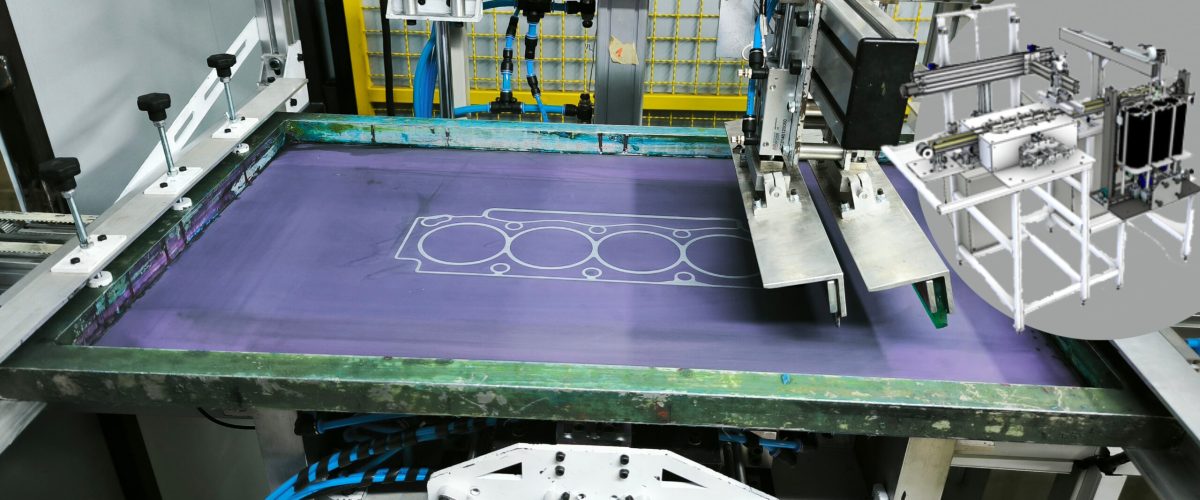
A highly precise and flexible solution for the application of materials in the automotive industry.
The application process is extremely demanding, given that the thickness and uniformity of the application is measured in microns. The machine is designed for fully automatic operation, with a capacity of 600-900 thousand parts per cycle, where the parts are automatically picked up, processed and transported to the exit belt for heating. An HMI system with a large number of parameters for setting and fine-tuning the process has been implemented. The solution is adapted to work with about 70 different types of parts, with maximum flexibility and repeatable quality.
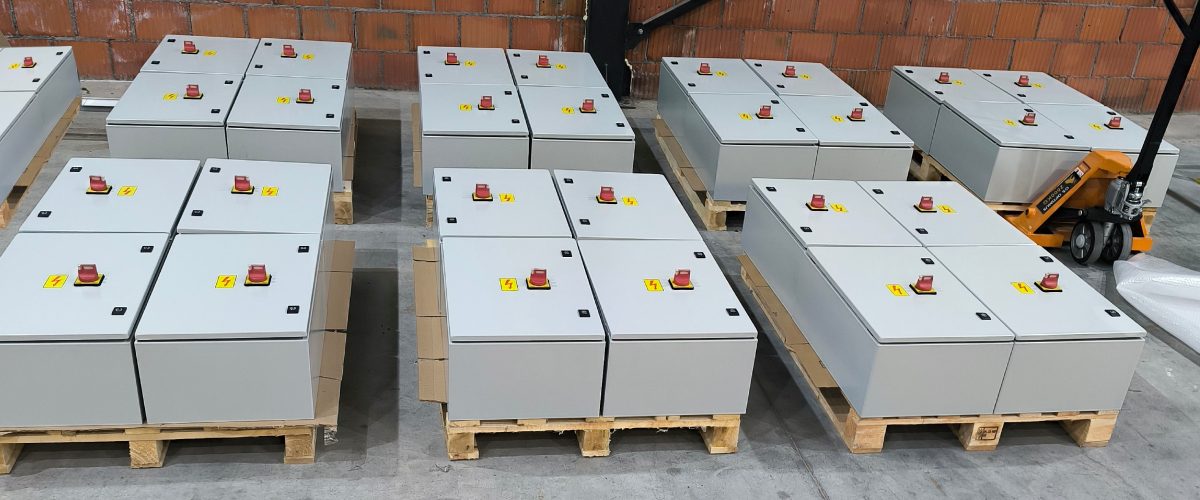
Complete production of electrical cabinets with PLC control and EPLAN documentation in record time
As part of the project, a total of 35 electrical cabinets were made, each with an integrated PLC system, power supply and feed switch for reliable protection. Special focus is placed on: Standardization and marking of conductors - all cables and connections are clearly marked for easier maintenance and visibility. Electrical documentation in EPLAN - complete scheme and project documentation is made in accordance with valid systems and standards, ensuring full traceability and professional reference. Fast implementation - a big challenge was the deadline of only a month and a half, but the project was fully complied with thanks to precise organization and teamwork. The client received a reliable and standardized solution, and the project was completed on time with maximum user satisfaction.
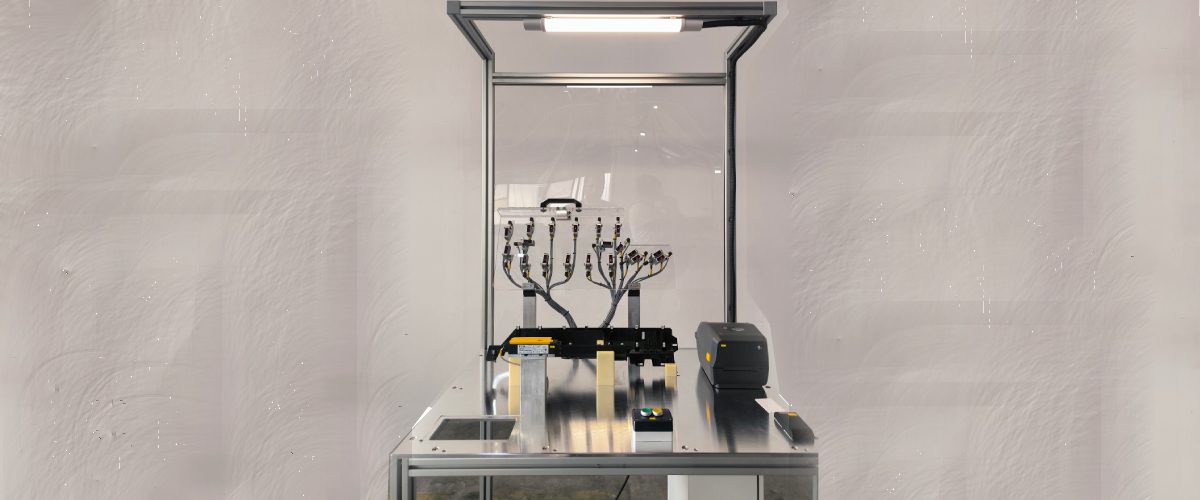
Advanced Poka-Yoke stations with integrated quality control and traceability systems
As part of the project, Poka-Yoke stations were developed and implemented, which ensure complete control of the presence and functionality of parts - from the smallest components to the largest assemblies. Add-ons and integrations that have ensured high efficiency and precision: Printers and scanners for automatic recording and verification of data. HMI interfaces for intuitive control and review of test results. Industrial cameras that enable high precision and extremely short cycle times. These stations are designed to eliminate the possibility of error in the assembly and control process, ensuring reliability, traceability and maximum productivity in the production lines of the automotive industry.
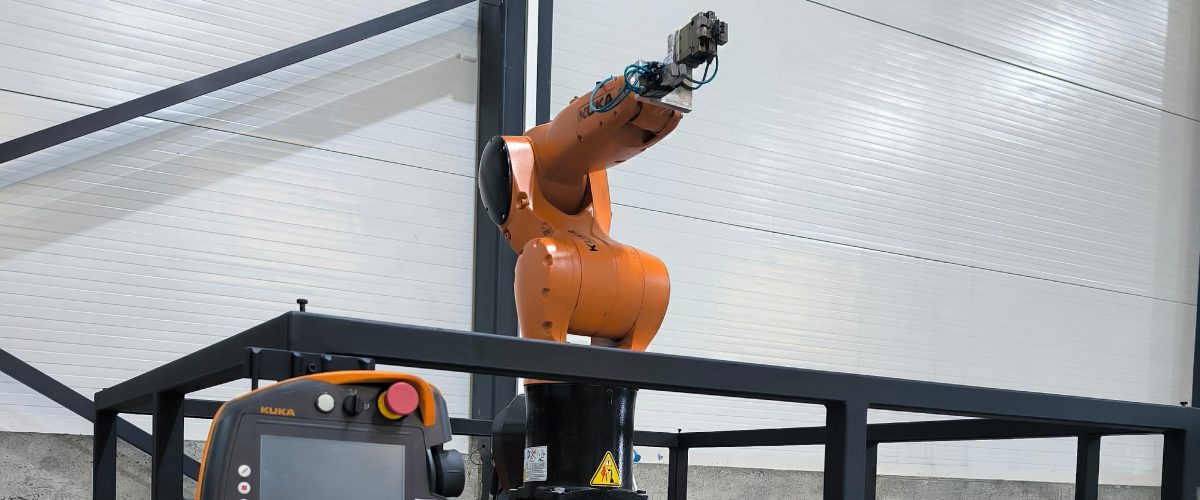
Portable robotic station for cyclic testing and durability analysis of components
The station is designed as a compact and mobile solution, with the robot located in the center, which can be transported and used anywhere in the production process. The goal of the station is to place a part or component and have the robot repeat the same cycle 20,000 to 30,000 times, depending on the moment of cracking or deformity of the tested part. In this way, it is possible to precisely determine the durability of various components - for example, the number of presses a key can withstand, or the resistance of a part to tearing and cracking. All test results are continuously monitored using sensors and industrial cameras, and the data is automatically recorded in the central system. This ensures detailed records and report generation for the end customer, which achieves complete traceability and reliable quality control.
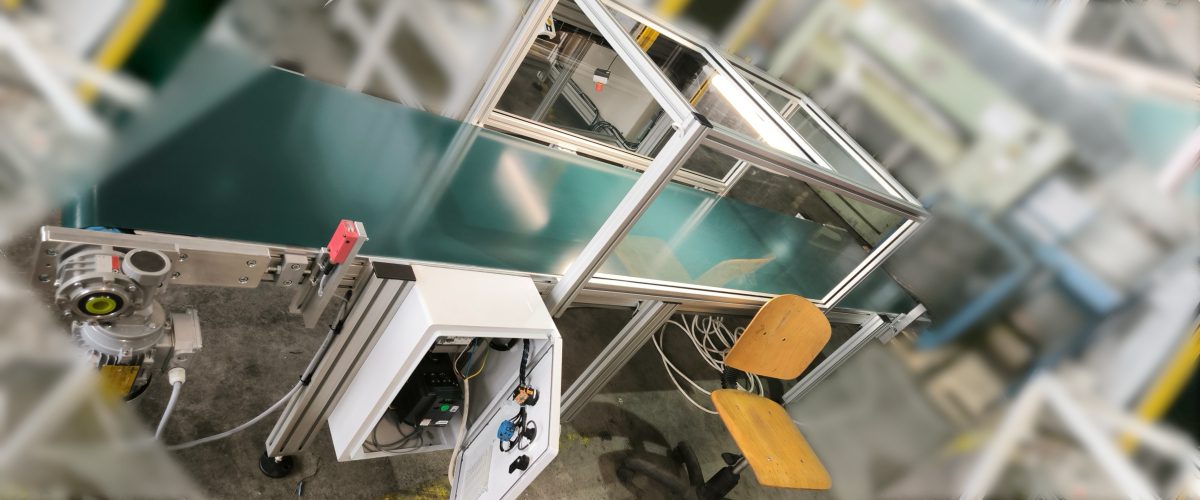
Transport systems with Schneider VFD control and sensors for efficient production
The project included the creation of transport conveyors with sensor-based operation logic - the system starts at the input sensor and automatically stops at the output. In this way, a simple and reliable control of the material flow through the production process is ensured. Schneider VFD devices were used to control the motors, which enabled precise speed regulation and optimal energy consumption, while keeping the project within the budget. The solution was delivered fully functional, tested and implemented at the client. The system works stably and reliably, and the client expressed satisfaction with the achieved performance and quality of production.
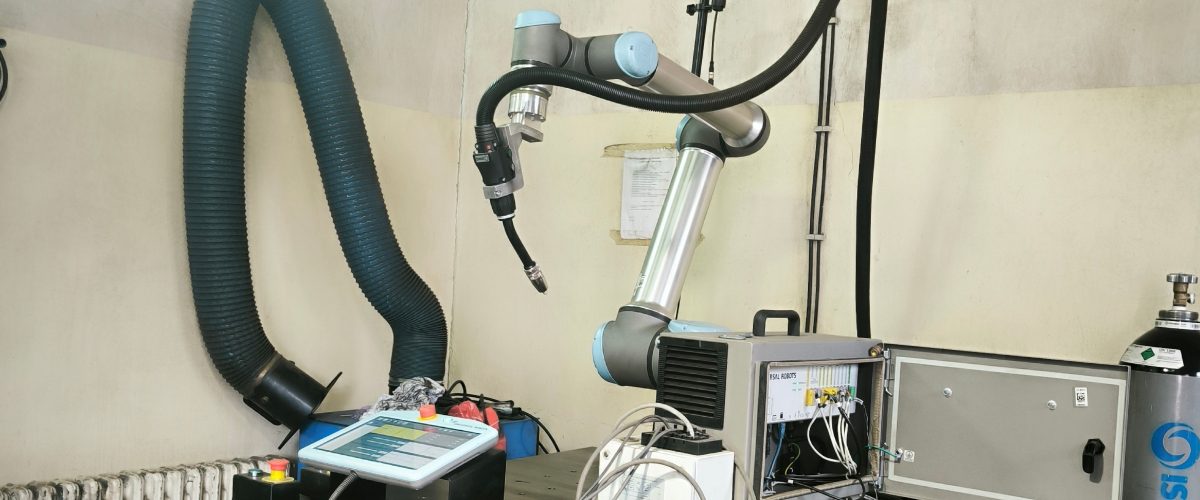
Complete integration of UR robot and laser system with safety standards
The project included the complete integration of the Universal Robot (UR) with the laser system, including the creation of an auxiliary electrical cabinet, primarily due to the fulfillment of all safety regulations. A detailed commissioning process of connecting the robot and laser was performed, as well as functionality testing through a welding demo program. The results showed that the robot in combination with the laser works perfectly, ensuring high precision and reliability of the application. The completed part of the project was delivered fully functional, with an application that was rated as extremely high-quality and efficient. The client received a solution that fully meets technical and security requirements.
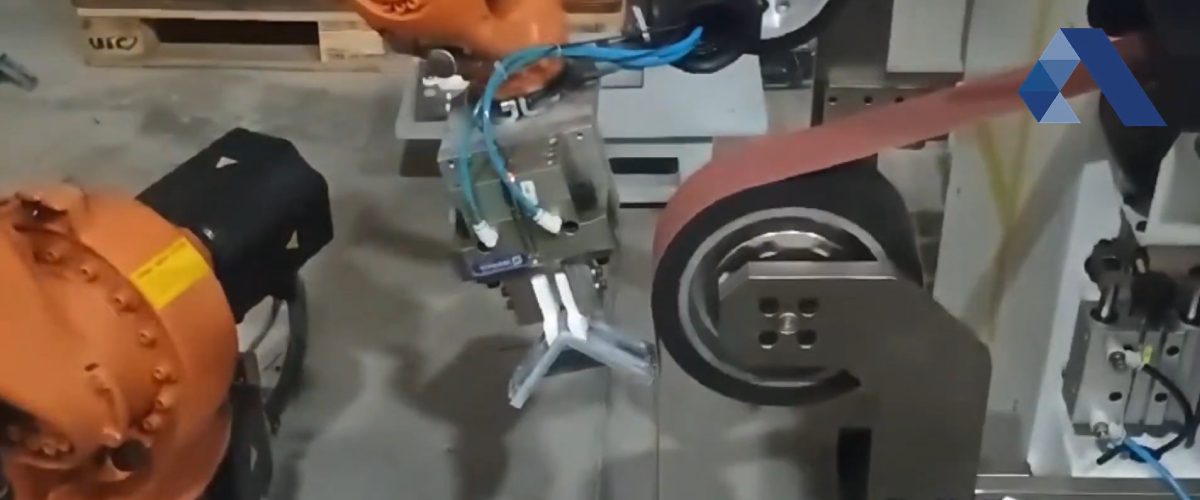
Automated station for grinding, drilling and edge processing with continuous operation
The station is designed so that the operator places the parts in two fixtures, while the robot picks up the components and processes them. The process includes edge grinding, drilling and countersinking, ensuring complete and precise machining of different types of parts. When the robot finishes processing one fixture, it automatically switches to another, while the operator fills the empty fixture with new parts. In this way, the system works without waiting and downtime, ensuring continuous production and maximum capacity utilization. The solution is delivered as a reliable and flexible station that enables high productivity, repeatability of the process and quality processing of parts in accordance with the client's requirements.
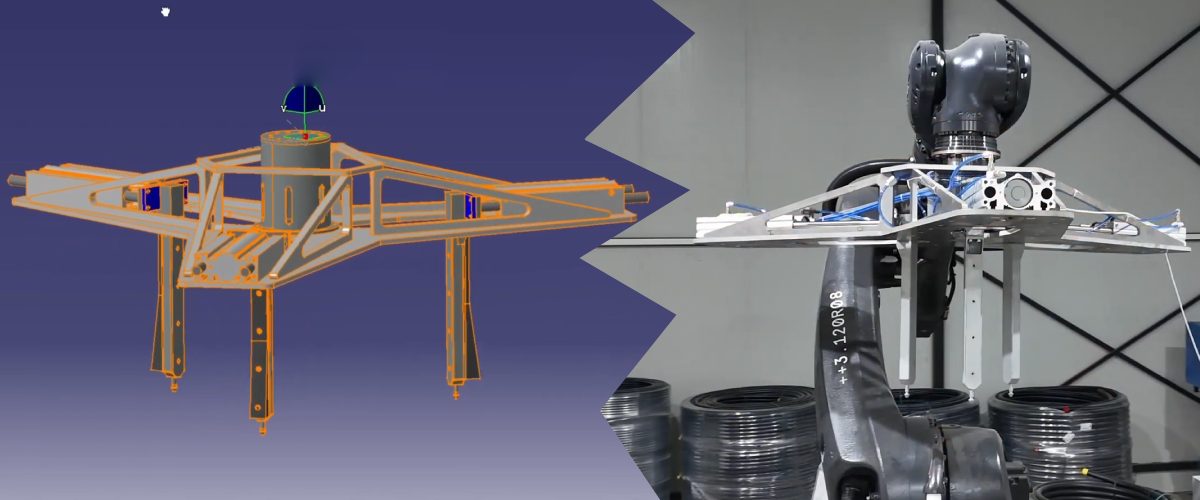
Development and testing of robotic grippers with 3D simulations and calculations
The project included the design and manufacture of various types of robotic grippers, intended for palletizing systems, manipulation and assembly of welding components, as well as for laser cutting applications. Our advantage is that we use 3D simulations that show the realistic behavior of the robot in conjunction with the gripper. After the simulations, we do detailed static and dynamic calculations, and only when we are completely sure of the functionality and reliability of the solution, we proceed to the production and careful assembly of the gripper. All gripper systems are tested by us for loads, as well as for electrical and logical functionality when necessary. Only after successful testing, grippers are handed over to clients as fully verified and reliable solutions.
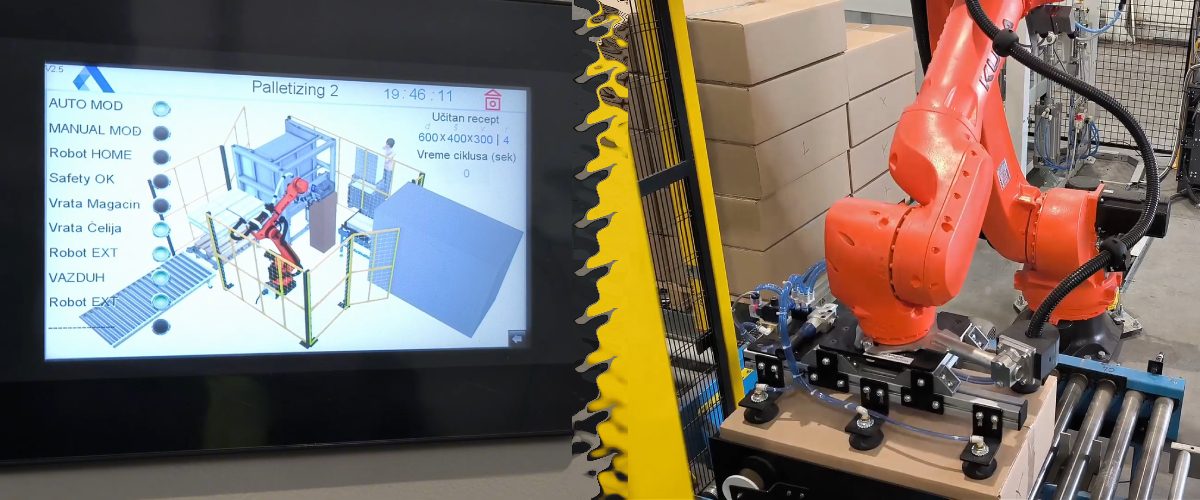
Automated palletizing station with pallet warehouse and optimized gripper
The station is designed to ensure the palletizing of over 30 different boxes, with an integrated automatic pallet warehouse with a capacity of 15 pieces. The pallets are automatically ejected to the position where the robot picks up and packs the boxes, making the entire process fully automated. A key role in this project was the design of a lightweight gripper, which had to fulfill two basic requirements: that the carrying capacity of the robot be in accordance with the weight of all types of boxes, but also to ensure safe and precise manipulation without the risk of falling out. The result is a station that ensures high productivity, flexibility in working with different dimensions of boxes and reliable automation of the palletizing process.
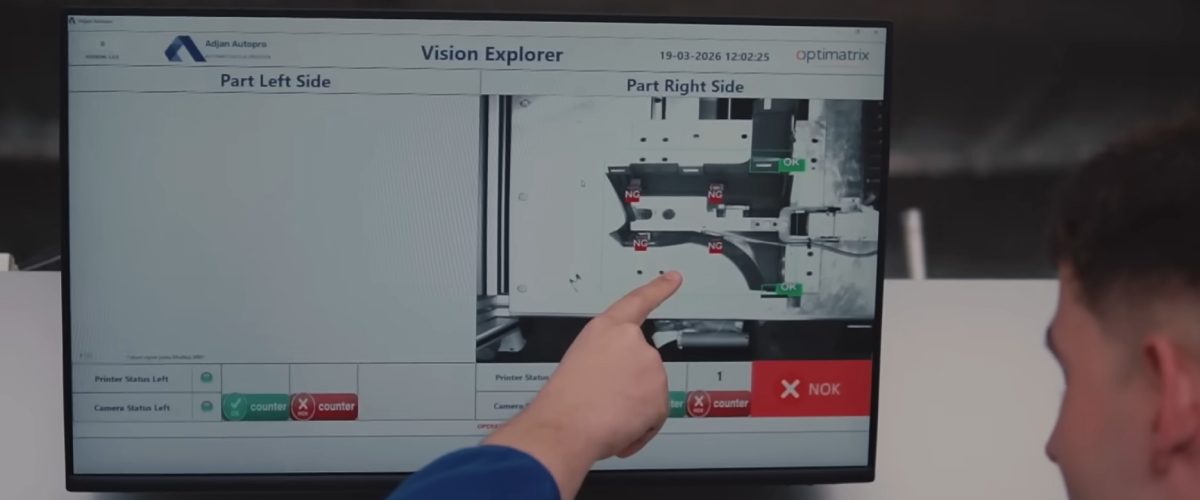
Two-cell ultrasound station with cameras for presence and positioning control
The station is designed to provide reliable ultrasonic welding of plastics with integrated Poka-Yoke cameras that check that all parts are present and correctly positioned. The system contains two completely separate workplaces that work independently of each other, without any problems in the continuity of production. The fast welding cycle enables the processing of up to three points in combination with cameras, which guarantees a short cycle time and high process reliability. A special challenge was to pack all the functionalities into a compact and mobile station, the development of which lasted almost three months. The final result is a station that combines mobility, speed and safety, and the client's satisfaction confirms that the effort and time invested was worth it.
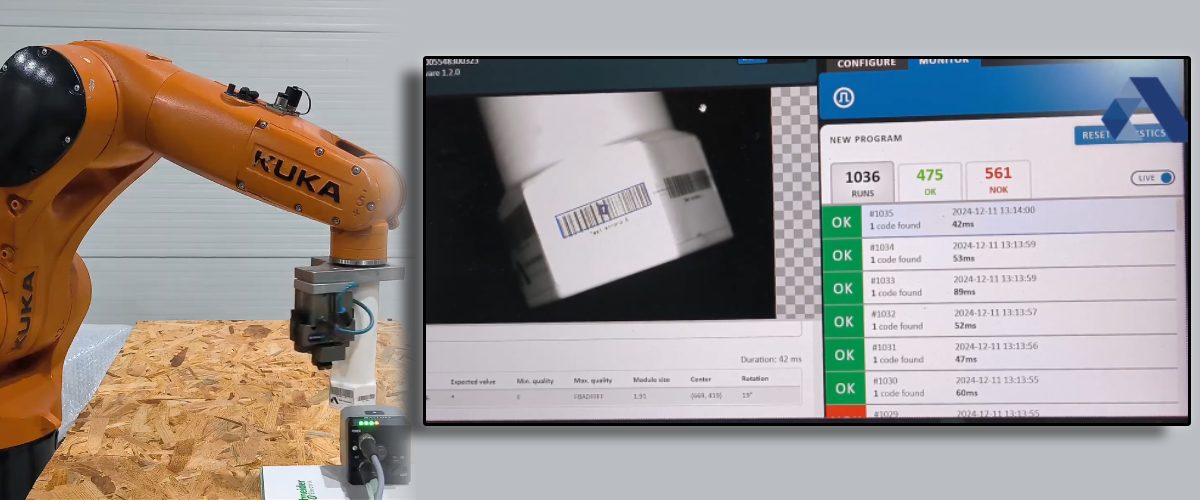
Vision code reading system with SQL base and automatic product sorting
The project included the creation of a camera for fast reading of barcodes and QR codes, with a particular challenge because the codes were placed in different places, irregularly distributed and without a defined order of appearance. As it was not possible to bring the client's entire machine to us for testing, in our center for vision technologies we created a demo system with a robot, which we used to simulate the procedure and speed of outputting products with codes. The entire system is set up to recognize the codes and automatically write them into the SQL database. In addition, sorting of products that have strayed from the line or have a damaged code has been implemented, thus ensuring reliable quality control. After the camera went through detailed settings and tests in our center, it was put into operation at the client's place in just two hours. Thanks to the previous simulation with the robot, the system worked perfectly from the first moment, which enabled a fast and efficient implementation.
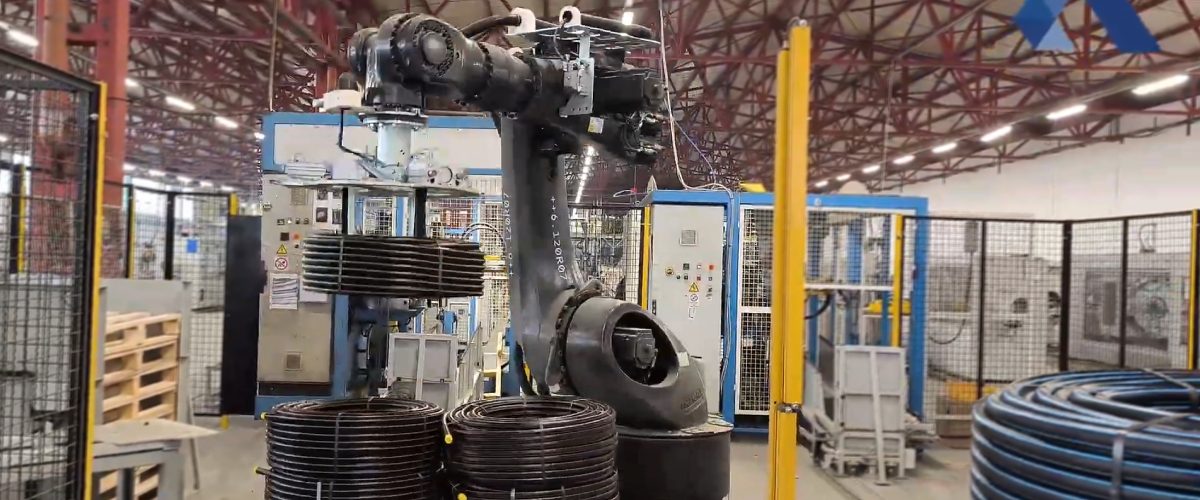
Automated reel packing line with innovative gripper
This project included the creation of a robotic reel packing station with two reels, where reels of different dimensions and weights are automatically picked up and placed on pallets. A particular challenge was that the reels are never the same, so the entire automation system had to be designed with maximum flexibility and reliability. After a long and detailed development, all solutions were found that allowed the line to work perfectly. The client's satisfaction was confirmed by the fact that negotiations for the construction of three more similar stations were immediately started. A specially developed gripper played a key role in this project. Our team of engineers has created a gripper that not only reliably picks up all types of reels, but also allows the robot to serve itself a pallet onto which it later places the reels. This innovation ensured maximum efficiency and complete automation of the packaging process.
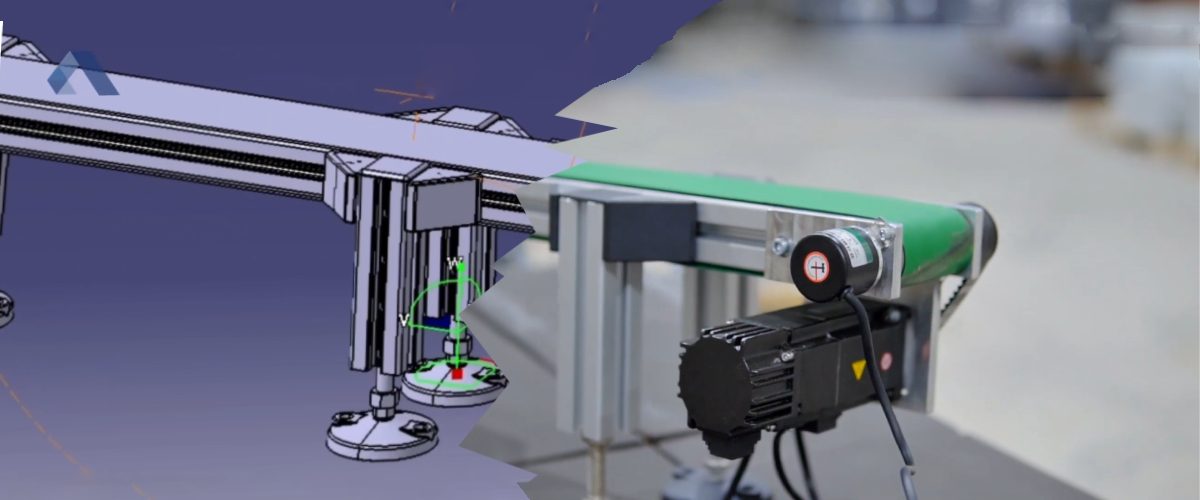
Conveyor systems with belts, rollers and chains tested for long-term reliability
The project included the development and implementation of various transport systems - from large belts 7 meters long to the smallest of 300 mm. A key role in this process was played by our team of engineers, whose task is to make precise calculations so that the systems are reliable and last for years. Belt conveyors, roller conveyors, conveyors with chains, as well as transfer systems with a combination of rollers and chains were made. All our systems are tested in real conditions, often 24 hours a day without interruption, with continuous monitoring. In this way, we ensure that each element is reliable and ready for long-term use by the client. The result is transport systems that combine robustness, flexibility and safety, and clients receive solutions that guarantee stable operation and a long service life.